
How to find holiday dates that work for everyone
You’ve got people interested in going away. Someone’s already looking at hotels. Then you ask when everyone can go.
“Any time in August.”
“Except the first week.”
“We need school holidays.”
“Can we make it a long weekend?”
Twenty messages later, you’re scrolling back through the conversation trying to work out whether anyone has actually suggested the same dates.
Start by agreeing a rough travel window, collecting everyone’s unavailable dates and checking how many nights they can manage. Then review the possible matches together before anyone books.
Here’s how to get an answer without becoming the group’s calendar detective.
Start with a window, not “when’s everyone free?”
It sounds like a sensible question. It also asks everyone to consider their entire year.
Give people something smaller to work with:
“Could we get away between the start of July and the end of August?”
Or:
“Shall we look at a long weekend sometime in October?”
The window can be broad at first. You’re narrowing the conversation enough for people to give a useful answer.
If someone has a firm restriction, bring it in now. There’s little point exploring June for weeks before discovering one family can only travel in the school holidays.
Get people to check, rather than guess

“I think we’re free” has a habit of becoming “I forgot about that wedding.”
Ask everyone to check their calendars and anyone they’re travelling with before replying. Work commitments, school dates and existing plans are easier to account for now than after you’ve found the perfect holiday.
If one person is answering for a couple or family, make sure their answer covers everyone they’re speaking for.
Give them a reasonable deadline:
“Can everyone check and share their dates by Sunday evening?”
That gives people time to look properly and gives the group a point at which to move forward.
Separate “can’t do” from “would rather not”
These can sound similar in a group chat, but they mean different things.
“I can’t travel that week” rules it out.
“I’d prefer the following week” leaves room for discussion.
Encourage people to be clear about which they mean. Otherwise, you can end up rejecting workable dates because a preference sounded like a fixed commitment.
People don’t need to explain every personal detail. “I can’t do 10–17 August” is enough.
The aim is to understand the limits, not get everyone to justify them.
Agree how many nights people can manage
You might all be free on the same Friday. That doesn’t mean everyone can go away for a fortnight.
Ask about trip length alongside availability.
Someone might want seven nights but be happy with four. Someone else might only be able to take a long weekend. Those answers can open up possibilities that a simple yes-or-no date poll misses.
Also, be clear about what you mean. “Friday to Monday, three nights” is easier to understand than “a few days”.
If people are travelling a long way, talk about whether a shorter stay would still feel worthwhile.
Put the answers somewhere you can find them
One person replies in the group chat. Another messages you privately. Someone mentions a change while you’re out for dinner.
Now you’re trying to remember which answer is the latest.
Keep one place for the group’s availability, and ask people to update it when their plans change. If you’re collecting answers manually, write down the actual dates rather than relying on memory.
Holiboss’s Date Check lets people type or speak their availability and share how many nights they’d like away. Their responses stay together, giving you a clearer picture of what might work.
Look for a shared fit before voting on favourites
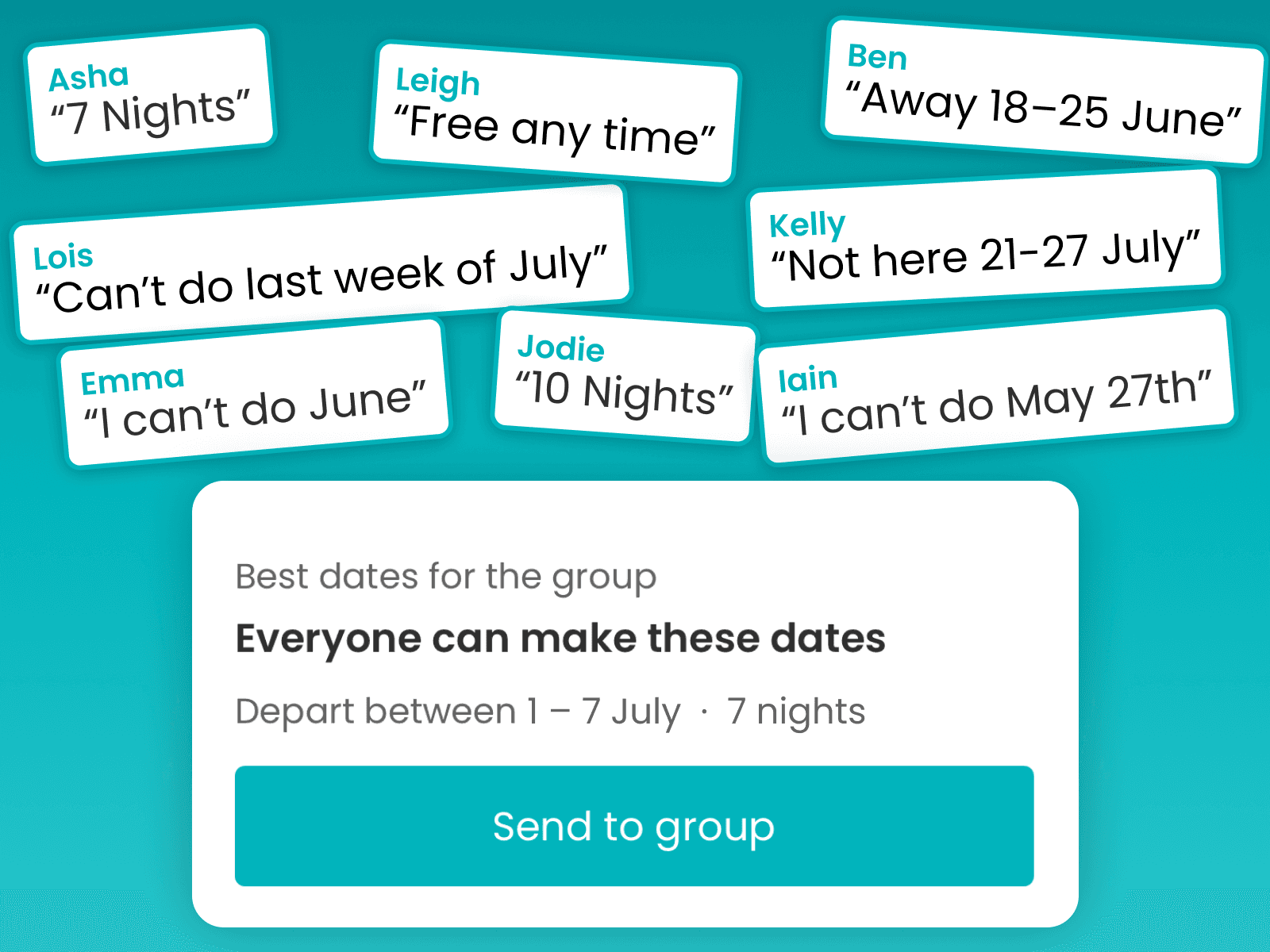
It’s tempting to suggest your preferred week and ask everyone to vote.
But the most popular week isn’t necessarily one everyone can make.
First, check which dates fit the group’s availability and trip lengths. Then ask people which of the workable options they prefer.
With Date Check, Holiboss uses the responses to suggest the best matching dates. You can review how many people can make an option and see where a compromise may be needed.
A suggestion is a starting point for agreement. It still needs a final check with the people going.
If nothing fits, find the sticking point
Sometimes there isn’t a week everyone can do. Asking the same question again probably won’t reveal one.
Look at what could change:
- Would fewer nights help?
- Could you widen the travel window?
- Is a preferred date being treated as unavailable?
- Would a different departure day work?
- Could people join for part of the trip, if the arrangements allow it?
Ask about the specific compromise rather than sending everyone back to their calendars.
“We can’t find seven nights together, but could everyone manage four?”
People may be able to move something. They may not. Give them room to answer without making someone feel responsible for holding up the holiday.
Don’t let silence choose the dates
A missing reply is frustrating, especially when everyone else has made the effort.
Send a direct, friendly reminder with a clear next step:
“We’re ready to look at dates, but we’re still missing yours. Could you share them by tomorrow evening?”
If someone still hasn’t answered, make clear that the dates are based on the responses you have. Don’t assume they’re available just because they haven’t said otherwise.
And if they aren’t sure they can come, it’s better to know that than keep treating them as a confirmed traveller.
Check the travel details before calling it settled
You’ve found dates everyone can make. Now check that the actual trip fits them.
Look at departure and return times, journeys to and from the airport, and whether an overnight journey changes the day people get home.
Someone who is free until Sunday evening may not be able to take a flight that lands early on Monday.
People travelling from different places may also have different flight options. Agree on the dates with those journeys in mind, rather than assuming everyone can follow the same schedule.
Get one clear confirmation
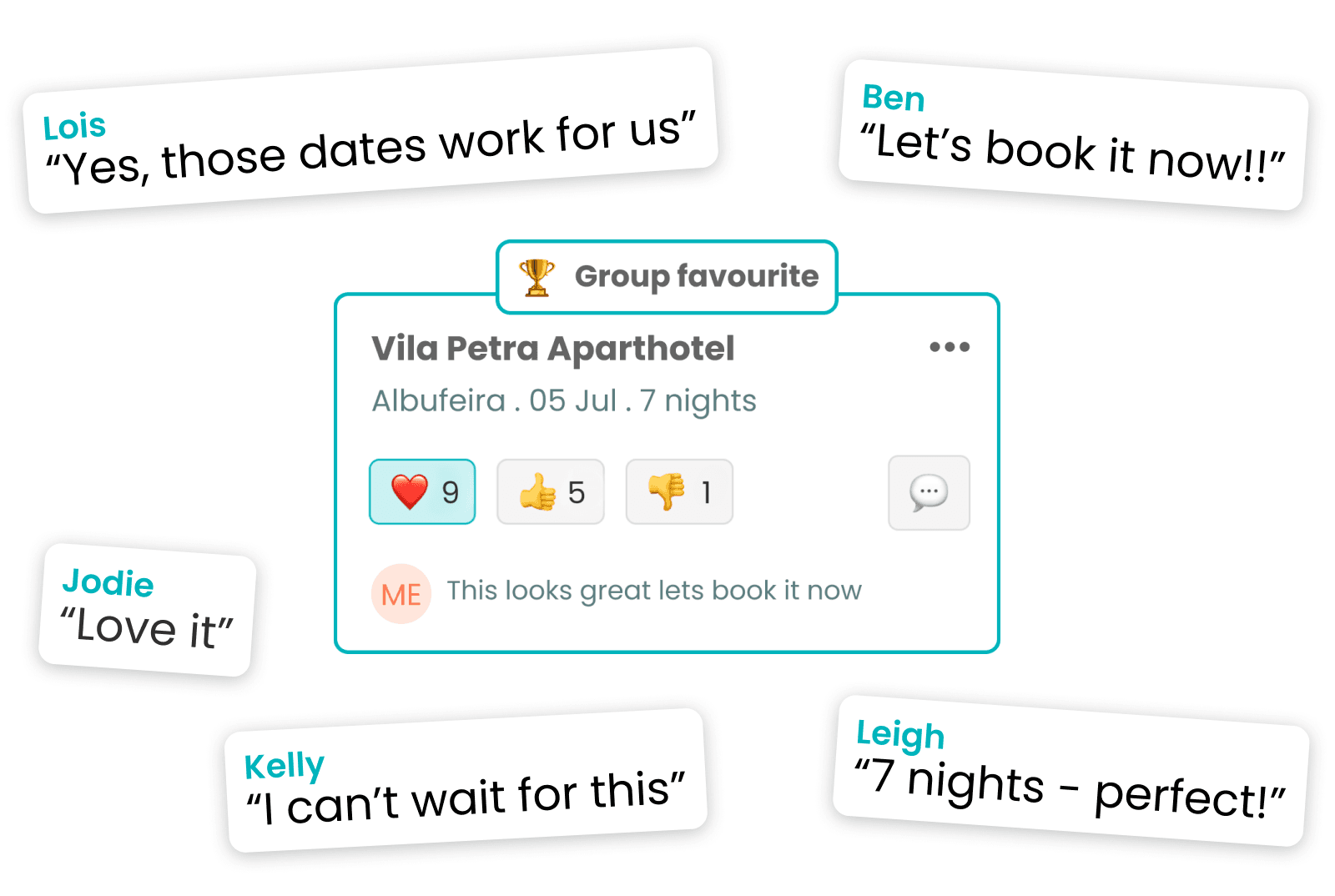
After all that discussion, don’t leave the final answer buried between a hotel link and a joke.
Share the exact dates and number of nights, then ask everyone who intends to come to confirm.
For example:
“Are we all happy with 12–19 September, seven nights, before we start booking?”
Make clear whether you’re agreeing on dates to search around or confirming a particular trip at its current price. Those are two different commitments.
If someone’s availability changes before booking, revisit it together.
A quick check before you move on
- Everyone intending to travel has shared their availability.
- Their answers cover anyone they’re speaking for.
- Fixed commitments and preferences are clear.
- The departure date, return date and number of nights are agreed.
- Travel times fit people’s commitments.
- Everyone knows whether these are proposed dates or confirmed plans.
- Nobody’s silence has been counted as a yes.
Less calendar detective work. More holiday to look forward to.
Finding dates can take more effort than choosing where to go. Giving everyone a clear way to answer makes the job easier.
Holiboss’s Date Check brings availability and trip lengths together, then helps you find the best matching dates for your group.
So you can stop piecing together replies and get on with choosing the holiday.